


Last updated: September 30, 2026, with the latest WSTS figures
Short answer: the global chip market is expected to grow by approximately 90 percent in 2026 to around 1.5 trillion dollars, mainly because AI data centers are buying enormous amounts of memory. According to WSTS, the memory market is growing by approximately 250 percent. As a result, DRAM and NAND are becoming scarcer and more expensive, and you can see this reflected in the prices of smartphones, laptops, SSDs, and USB sticks.
The global semiconductor market, the chips that power our computers, servers, and data centers, is growing faster than ever before. At the end of 2025, the industry association WSTS still expected the chip market to reach just under 1 trillion dollars in 2026. In June 2026, that forecast was raised sharply to 1.51 trillion dollars. In this blog, we explain what is happening, why demand for storage is increasing, and what this means for you.
The chip market in figures
| Year | Global chip market | Source |
|---|---|---|
| 2025 | approx. 772 billion dollars | WSTS, fall 2025 |
| 2026 (forecast) | approx. 1.51 trillion dollars (+90%) | WSTS, spring 2026 |
| 2027 (forecast) | approx. 1.9 trillion dollars (+27%) | WSTS, spring 2026 |
After the actual figures for the second quarter of 2026, the calculation for all of 2026 comes to approximately 1.66 trillion dollars. Note: 1 biljoen in Dutch is 1 “trillion” in English.
What is driving the rapid growth of the chip market?
The AI revolution requires new types of chips: not only powerful processors for training and running AI models, but also large amounts of memory and storage.
The construction of AI data centers and large-scale cloud infrastructure is leading to enormous orders for memory such as DRAM and NAND. According to WSTS, the memory segment will grow by approximately 250 percent in 2026 to more than 800 billion dollars. Memory is therefore the main driver behind the growth of the entire chip market.
More demand means higher prices and scarcity. Because memory chips are being purchased faster than factories can produce them, DRAM and NAND prices are rising significantly. This also makes consumer hardware more expensive.
Why data centers need so much storage
AI models process enormous amounts of data. Major cloud providers such as Amazon, Google, and Microsoft are therefore deploying increasing amounts of memory and storage to:
- training and updating AI models;
- running real-time AI applications;
- moving large amounts of data to and from servers.
This shift is driving demand both for advanced chips and for enormous storage capacity. Read about what goes on inside a memory factory in our report we went to the source of your smartphone.
What does this mean for data storage and USB accessories?
Although these chip trends mainly concern major industrial players, they also affect ordinary users. USB flash drives, SSDs, and memory cards use the same NAND chips. In addition, the amount of data we generate ourselves is growing:
- larger files, such as photos and 4K videos;
- more devices that need to exchange data;
- a greater need for fast and reliable storage.
That is why we are seeing growing demand for:
- USB flash drives: ideal for transferring files and making backups;
- internal SSDs: plenty of capacity and high speed for PC, laptop, and PS5;
- USB-C hubs and docks: more connections for all your devices.
Making smart choices in an expensive memory market
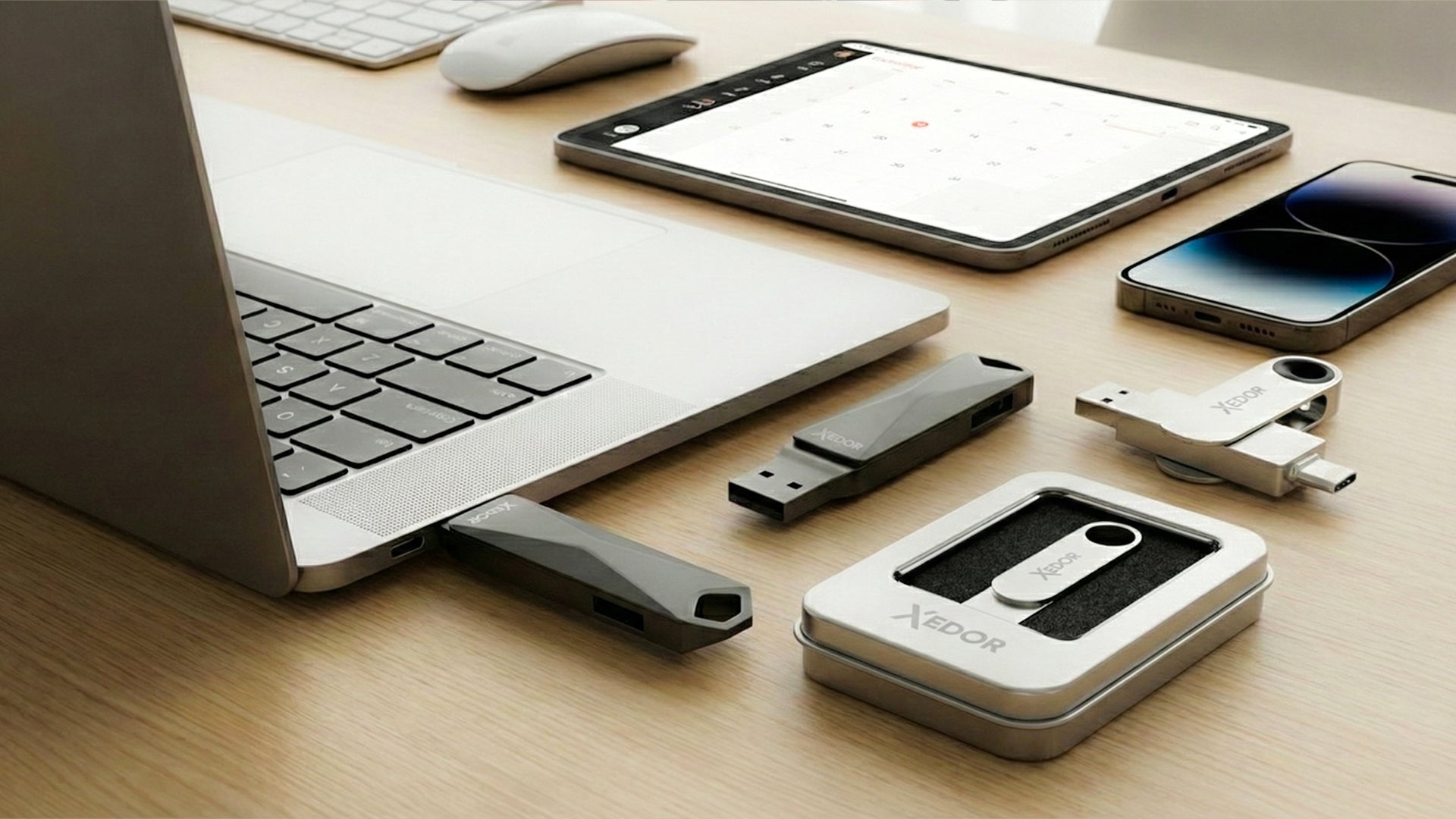
Buy the capacity you really need. The Xedor Base is available from 32 GB to 1 TB, with USB-C and USB-A in a single drive.
Practical tips for managing data at home
You do not need to build a data center to learn from these trends. Still useful:
- regularly back up important files, read how to make a good backup;
- choose carefully between storage media (USB flash drive or SSD);
- choose your capacity based on your usage, read which storage capacity you need.
Frequently asked questions
How large is the chip market in 2026?
According to WSTS's spring forecast, approximately $1.51 trillion, an increase of around 90 percent compared with 2025.
Why is memory becoming more expensive?
AI data centers are buying large quantities of DRAM and NAND, while factories cannot quickly expand their production. That shortage is driving prices up.
Will storage become cheaper again?
That is uncertain. WSTS also expects the memory market to continue growing in 2027, so a sharp price decline is not likely in the short term.
In summary
The AI boom is changing not only how computers are built, but also how data is stored and used. The chip market's growth to approximately $1.5 trillion in 2026, driven by memory and AI, shows how central data storage has become. Good storage solutions are therefore more important than ever, from professionals to consumers.
Share via:
USB-C explained: what can you do with it, and which accessories do you really need?
Why your smartphone is getting more expensive (we went to the source)